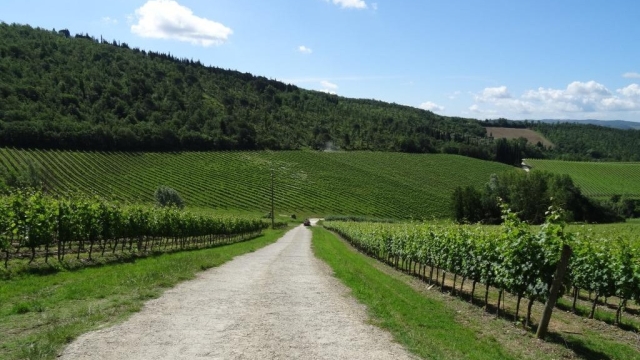
In ancient times, pilgrimage-widespread until the early 19th century-was a mass phenomenon involving millions of people across Europe.
Throughout history, many different "Roman Routes" developed, varying according to their starting points, road conditions, and the dangers along the way, including banditry. A key factor for pilgrims was the possibility of finding shelter in safe places such as monasteries and religious orders.
The Via Romea Germanica is one of several routes established in the 13th century as a "Via Melior," a safer alternative for pilgrims from Northern Europe. The passes at Brenner and Serra, being some of the lowest and most accessible, made this path an ideal choice.
This route invites you to explore some of Central Italy's most evocative landscapes, from Lake Trasimeno, the largest lake in central Italy, to Lake Bolsena, one of the region's most enchanting bodies of water.
Forlì, the ancient Forum Livii, is one of the historic Roman market towns that dot the Via Emilia, the great road stretching from Rimini to Piacenza. Beyond its millennia-long history, Forlì is considered the linguistic heart of the Romagnol dialect. After belonging to the Ostrogothic Kingdom and, together with Ravenna, to the Byzantine Empire, the city passed almost continuously under the Papal States-from the time of Pepin the Short and the forged Donation of Constantine-until Italian unification in 1861.
Traveling into the Casentino region, within the Casentino Forests National Park, Monte Falterona and Campigna, you reach Chiusi della Verna. This village is world-famous for the Sanctuary of La Verna, where St. Francis received the stigmata-a true spiritual haven nestled in nature. The town's name likely comes from the Latin Clausum or Clusum, possibly referring to an ancient customs post that monitored caravans arriving from the Adriatic.
The Casentino is crossed from south to north by the historic Via Maior, also known as the Via Romea. It was the preferred route for Germanic pilgrims heading to Rome, offering an alternative to the better-known Via Francigena. Even today, the stretch descending from Bagno di Romagna preserves fascinating traces of its ancient paving stones-a tangible reminder of the centuries of history this route has witnessed.
Full Itinerary
Day 1 â€\" Arrival in Castiglione del Lago
Welcome to Castiglione del Lago! After checking into your hotel, if you arrive early we recommend a stroll through the medieval streets or a relaxing moment on the lakeside promenade with a glass of crisp white wine. The town's name recalls the emblem of the noble family who once ruled these lands: Castellum Leonis-the Castle of the Lion-later shortened to Castiglione. Thanks to its strategic location between Orvieto, Chiusi and Arezzo, it became a battleground between Etruscans and Romans, which explains why its fortifications were destroyed and rebuilt several times over the centuries.
Day 2 â€\" From Castiglione del Lago to Paciano
A long but pleasant walk awaits, leading you through plains and rolling hills between Lake Trasimeno and Lake Chiusi. After a stop in the small village of Pozzuolo, continue along the ridge: once an ancient Etruscan route designed to avoid marshlands. Today, the path runs beside a modern paved road, which you can leave from time to time for a more scenic and comfortable walk. The panoramic views are the highlight of the day: gentle hills, glimpses of the lakes, and tiny hilltop villages scattered along the horizon.
Day 3 â€\" From Paciano to Città della Pieve
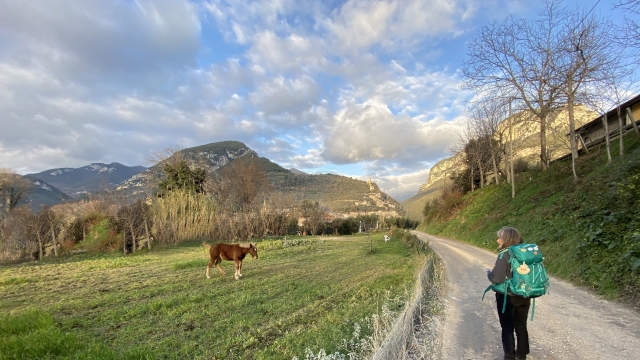
This stage unfolds almost entirely along dirt roads, winding through the quintessential Umbrian countryside: cultivated fields, farmhouses, and tiny rural hamlets. Leaving Paciano, the trail climbs up Mount Petrarvella through forests and olive groves, passing elegant villas and ancient stone houses. After reaching San Donato and its church, a beautiful country track leads you straight toward the first houses of Città della Pieve and into its charming historic center.
Day 4 â€\" From Città della Pieve to Fabro Scalo and train to Orvieto
Exit Città della Pieve through Porta Orvieto and descend along a white gravel road into the valley of the Chiani stream. Halfway along the route, don't miss the tiny church of Madonna degli Angeli. Continuing on peaceful country lanes, you'll reach Santa Maria, a hamlet of Monteleone d'Orvieto, and then Fabro Scalo, where a short train ride brings you to Orvieto. Orvieto rises on a dramatic tuff cliff-between 280 and 325 meters high-overlooking the Paglia Valley. It feels like a natural balcony suspended above the heart of Umbria.
Day 5 â€\" From Orvieto to Bagnoregio
Today's stage winds through the serene rural landscapes of central Italy, along gravel roads and countryside paths. We recommend stopping by the Capuchin Convent and the pretty village of Porano. In ancient times, travelers approached Civita from the calanchi badlands and Lubriano through the Bucaione, a tunnel carved directly into the rock. Today, this magical suspended village is reached via the concrete footbridge built in 1965. Visiting Civita di Bagnoregio is a once-in-a-lifetime experience: its intact medieval layout, quiet lanes, and timeless atmosphere make it unforgettable. The ongoing erosion threatening the town has earned it the nickname "the dying city."
Day 6 â€\" From Bagnoregio to Bolsena
The journey continues through the peaceful countryside of central Italy, among dirt paths, thick woods, and open meadows dotted with olive trees. You descend into an ancient volcanic crater before reaching Bolsena. Here you can visit the Chapel of the Miracle, which preserves the marble slabs stained with blood from the famous 13th-century Eucharistic miracle. If you'd rather indulge in local cuisine, don't miss the Sbroscia, a traditional lake-fish and tomato soup, a true hallmark of Bolsena's culinary heritage.
Day 7 â€\" From Bolsena to Montefiascone
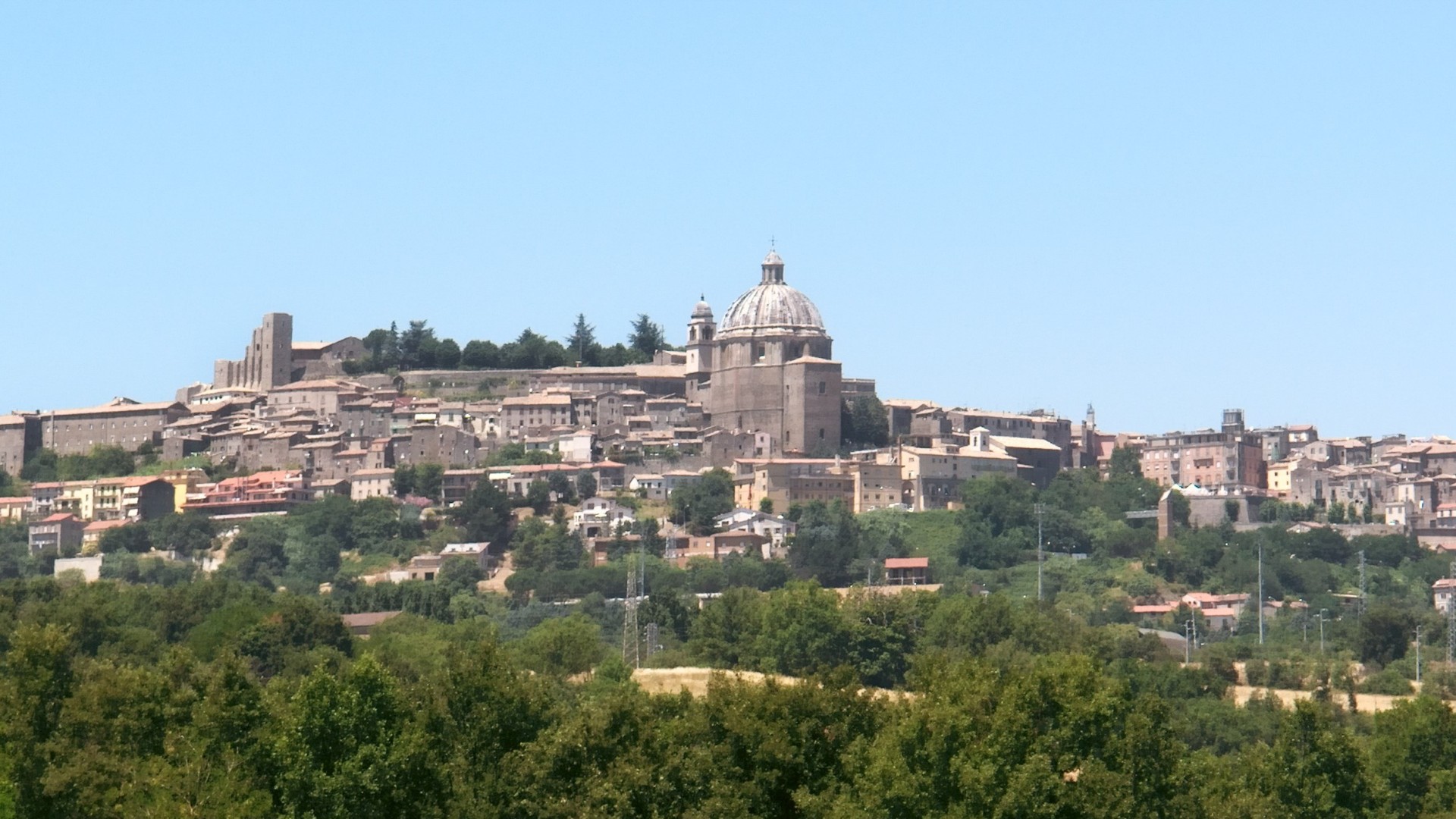
Today's walk follows the crest of the hills that frame the eastern shore of the lake. You arrive in Montefiascone, a lively hilltop village with breathtaking views over Lake Bolsena, the surrounding plain, and the Cimini Mountains. Be sure to visit the Rocca dei Papi, the fortress offering sweeping panoramas over the entire region.
Day 8 â€\" Departure from Montefiascone
Your final day. After breakfast, it's time for goodbyes and your onward journey.
Details
The rate includes
- 7 night stay at Hotel, B&B or Farmhouse
- Accommodation in a double room, including breakfast, in the following locations and facilities (or similar):
Castiglione del Lago: "Le Macerine" Hotel
Paciano: Boutique Hotel "Antico Sipario"
Città della Pieve: "Vannucci" Hotel
Orvieto: Hotel "Corso"
Bagnoregio: "Romantica Pucci" Hotel
Bolsena: Hotel "Royal"
Montefiascone: Hotel "Urbano V"
- Luggage transport from one accomodation to another
- Route descriptions, maps, GPS tracks and Apps
- Medical-luggage insurance
The rate does not include
- Transfers, meals not mentioned, gratuities, extras of a personal nature and anything not expressly indicated in "The Price Includes"
- Optional cancellation insurance, quotation on request