
The Marmore Falls: Numbers That Inspire Awe
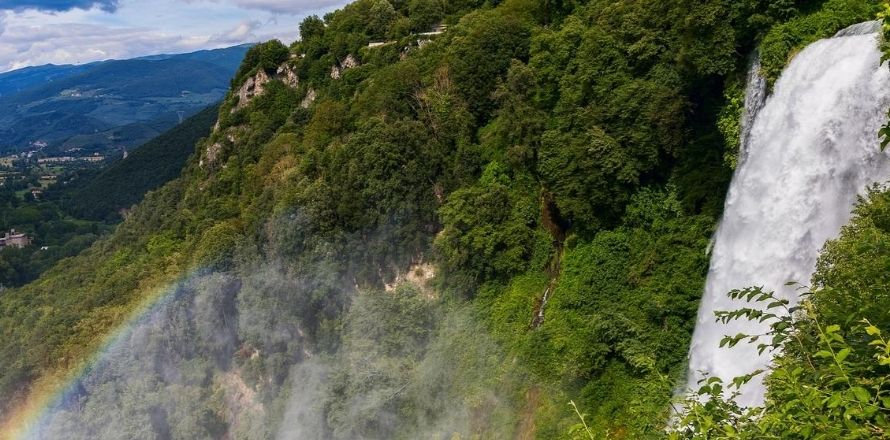
Everyone knows it as the tallest man-made waterfall in Europe, with its spectacular 165-meter drop. But the numbers behind the Marmore Falls don't end there: each one reveals a surprising detail, capable of turning a simple visit into an unforgettable experience.
Did you know, for example, that the highest single drop measures a full 83 meters?
And that every year the waterfall "lives" more than 1,200 hours of opening time, following a schedule of water shows that enchant visitors from all over the world?
When the sluice gates open, the spectacle is immediate: in just 5 minutes the initial flow of 120 liters per second transforms into a colossal surge of water that reaches a maximum flow rate of 16,000 liters per second. A true natural symphony that shakes the air and fills the valley with an unmistakable roar.
It's no surprise, then, that the waterfall welcomes over half a million visitors each year. To explore it at its best, you can choose between 2 entrances, 5 hiking trails immersed in greenery, and 3 spectacular viewpoints offering breathtaking perspectives.
A Unique Oasis of Biodiversity in Europe
The Marmore Falls is not only an engineering masterpiece: it is a true natural treasure chest, so rich and precious that it has been recognized as a Special Protection Area at the European level.
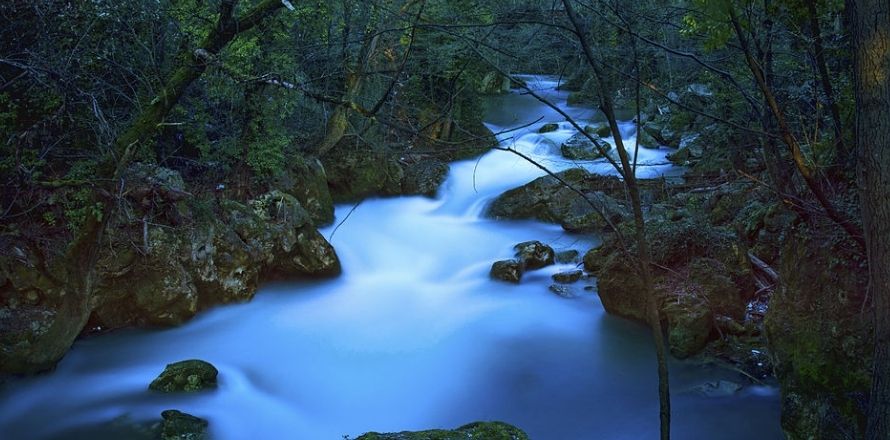
The vegetation is lush and primordial. Amid steamy waters and damp rock walls grow blue and green algae, mosses and lichens that veil the stone surfaces, along with ferns and many other aquatic and terrestrial species. A microcosm where nature seems never to have paused.
The fauna is equally varied: insects, amphibians, fish, reptiles, and small mammals all find their ideal habitat here. But it is the birdlife that most captivates enthusiasts: the area is a paradise for birdwatching.
You can observe rare species such as the White-throated Dipper and the Grey Wagtail searching for food along the tumultuous waters of the Nera River; or witness the migrations of the Kingfisher. Alpine Swifts and the Blue Rock Thrush choose the bare rock walls as their home, nesting undisturbed.
The Hidden Secret Beneath the Mountain
Perhaps the most surprising-and least known-aspect of the Marmore Falls lies beneath the feet of its visitors.
At the highest point, near the upper viewpoint, spreads the plateau of the Campacci di Marmore, an area shaped by the waters of the Velino, which stagnated here until 271 BC, when human intervention gave rise to the waterfall.
The terrain, a vast deposit of porous travertine, holds a fascinating treasure: a system of natural caves that threads through the mountain like a hidden pattern.
Entering these caverns means taking a journey back in time. The walls tell millions of years of history through plant fossils, delicate filigrees reminiscent of coral shapes, and imposing structures of stalactites and travertine columns. The tunnels open into small hidden chambers where the filtered light creates almost magical plays of color and atmosphere.
If you wish to experience a blend of nature, history, adrenaline, and wonder, the Marmore Falls is a place to mark on your agenda. Every drop, every trail, every cascade tells a story worth discovering.

History of the Waterfall: a masterpiece of ancient ingenuity
The Waterfall is not only a breathtaking natural spectacle, but also one of the most extraordinary feats of hydraulic engineering from antiquity. Its origins date back to 271 BC, when the Roman consul Manlius Curius Dentatus decided to radically transform the Reatine valley of the Velino. At the time, this area was a vast marshland-unhealthy and difficult to inhabit-a territory in urgent need of reclamation.
To drain the valley, the Romans built artificial channels capable of conveying the stagnant waters of the Velino into the Nera River. It was an innovative and bold choice, though not welcomed enthusiastically by the inhabitants of Terni, who feared the enormous volume of water that could pour into their city.
In the centuries that followed, numerous channels were built to regulate the waters and control their flow: from the Cava Curiana to the Cavo Reatino (or Gregoriano), from the Cava Paolina to the Cava Clementina. These were imposing works, yet they required constant maintenance and did not always succeed in containing the impetuous force of the water. Indeed, the Valnerina was often the scene of flooding and significant damage.
The turning point came only in 1787. At the initiative of Pope Pius VI, architect and engineer Andrea Vici was commissioned to design the Pio Canal and intervene directly on the structure of the Waterfall. He shaped its three scenic drops and ensured a steady water flow, giving the Waterfall the harmonious and spectacular appearance we admire today.
Today, the Waterfall is much more than a hydraulic work: it is a living monument where history, nature, and human ingenuity intertwine. Visiting it means not only witnessing a natural wonder, but embarking on a true journey through time to discover centuries of transformations, challenges, and extraordinary innovations.
Myth and Legend of the Marmore Falls: Between Eternal Loves and Mischievous Sprites
Visiting the Marmore Falls doesn't just mean immersing yourself in one of Italy's most captivating natural wonders-it also means stepping into a world suspended between myth, poetry, and ancient folk traditions. Behind the roar of the water plunging for more than 160 meters lie stories that have fascinated travelers and the inhabitants of the Valnerina for centuries.
Nera and Velino: The Love That Created the Waterfall
The most famous legend tells of the overwhelming love between the beautiful nymph Nera and the young shepherd Velino-a pure love, yet so ardent that it provoked the envy of the stern goddess Juno. To punish the lovers, she transformed Nera into a river.
Desperate and unwilling to be separated from her, Velino threw himself from the Marmore cliff to reunite with his beloved. Thus, according to the myth, the majestic waterfall we admire today was born. Even now, as the water thunders into the gorge below, it almost seems possible to hear the echo of that eternal bond.
The Gnefro: Valnerina's Mischievous Sprite
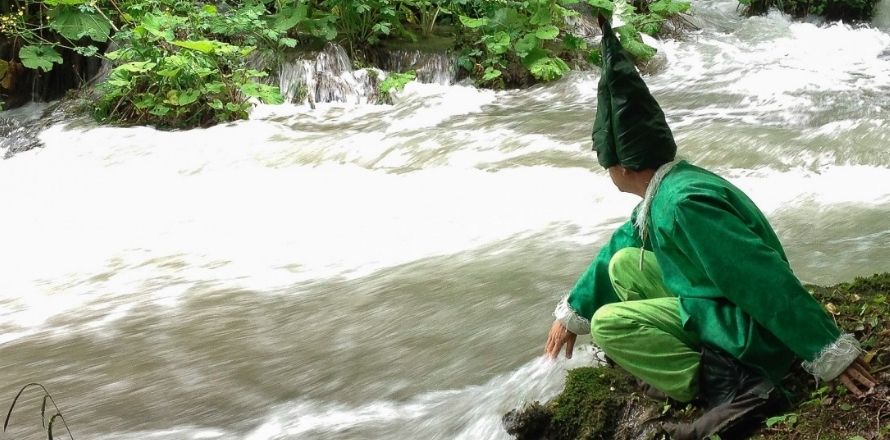
Few know that alongside the romantic tale of Nera and Velino, there exists a more playful and mysterious story: that of the gnefro, a little sprite emblematic of Terni's folk tradition.
It is said that these tiny beings, standing less than a meter tall, live in groups near the waterfall, hidden among the lush vegetation and the river-soaked rocks. Gifted with small magical powers, they love to play tricks on travelers-though never in a truly dangerous way.
The gnefro is said to appear mainly at night: sometimes with the innocent look of a smiling child, other times with the features of a wrinkled old gnome ready to give a fright to anyone bold enough to wander along the path.
Some swear they have glimpsed it amid the mists rising from the waterfall, and according to certain beliefs, keeping a small effigy of it at home brings good luck and protection.
If you're planning a visit to the Marmore Falls, let yourself be enchanted not only by its natural beauty but also by the magical world that surrounds it. Between eternal loves and playful sprites, every corner of this place tells a story worth hearing.
Art and Inspiration at the Marmore Falls: a Journey Through History, Brushstrokes, and Wonder
The Marmore Falls is not only one of the most captivating natural spectacles in Europe: for centuries it has exerted an irresistible magnetism on travelers, poets, scientists, and great figures of the past. Since antiquity, personalities such as Pliny and Cicero have praised its beauty, and over the centuries its fame has continued to grow, attracting Popes, Galileo Galilei, Vittorio Alfieri, Ferdinand II of Bourbon, the Queen Mother of Naples, Gioacchino Belli, and even Lord Byron, who was profoundly enchanted by it.
Adding even more fascination to this place is a recent and evocative discovery: it appears that Leonardo da Vinci also depicted the Falls and the nearby village of Papigno in his famous drawing Landscape with River from 1473, now preserved in Florence. A detail that makes Marmore an even more precious destination for lovers of art and history.
Between the 18th and 19th centuries, the Marmore Falls also became an essential stop on the Grand Tour, the long educational journey that took young European aristocrats to discover the wonders of Italy. At the time, no one would have dared to reach Rome without first allowing themselves to be captured by the power and poetry of this extraordinary waterfall.
But there is a lesser-known and truly fascinating chapter: between the 18th and 19th centuries, the Falls became a genuine creative temple for en plein air painters-artists who loved to paint from life, fully immersed in nature, long before the advent of photography. Among them were illustrious names such as Turner, Corot, Courbet, Granet, Bidauld, Verstappen, Blechen, and Palm-artists who immortalized the waterfall in works now held in museums around the world.
To recapture the atmosphere that inspired these masters, the Museo Diffuso dei Plenaristi was created-a captivating route that guides visitors to the exact spots where the artists once set up their easels. It is an invitation to rediscover the landscape through their eyes and to experience-even just for a moment-the same emotion that moved them to capture the strength and grace of the Marmore Falls on canvas.
A journey through art, nature, and history: impossible not to be captivated.

DISCOVER MARMORE FALLS WITH OUR TRAVEL PROPOSAL:
Active Weekend in Umbria
Bike Tour
Relax and fut at Piediluco Lake
Food journey: discover black truffles in Valnerina
In the Saint Valentine's Land