
The Lake Trasimeno area in Umbria is rich not only in picture-perfect landscapes-hills, calm waters, medieval villages-but also in evidence of ancient agriculture and local biodiversity.
In this article, we analyze two crops that showcase the area's peasant roots and gastronomic richness: Fagiolina del Trasimeno (Presidio Slow Food) and Granoturco Quarantino, an ancient corn that represents the memory of traditional Italian agricultural practices.
Trasimeno Bean: A Tiny and Precious Legume
Origins and history
The Fagiolina del Trasimeno is a local variety of legume that has been cultivated around the lake basin for centuries. Its origins probably date back to ancient Mediterranean exchanges, adapting perfectly to the soils and climate of the area.
With the abandonment of the countryside, cultivation had almost disappeared, but thanks to the initiative of Slow Food and some farmers it was recovered, becoming the Slow Food Presidium.
Characteristics and cultivation
The Bean is famous for its tiny size, comparable to a grain of rice, and for the chromatic variety of its seeds, which can be white, cream, salmon, brown, black or mottled.
Cultivation requires great manual skills: sowing, hoeing, harvesting, drying and beating are still done by hand.
Harvest takes place between late July and early October, as the pods ripen at different times.
The thin skin and fine-grained pulp make it particularly digestible and tasty.
Taste, uses in cooking and gastronomic value
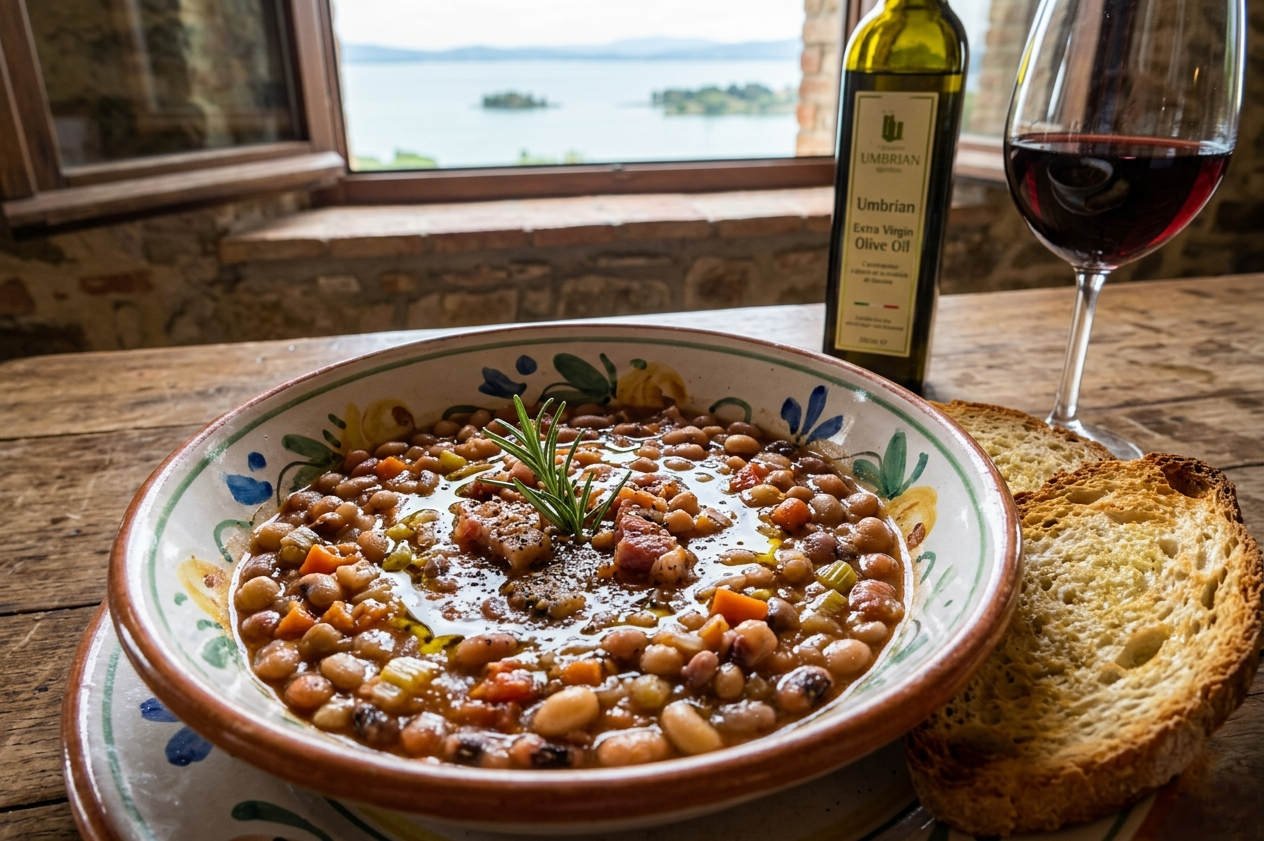
The flavor is delicate, with light herbaceous notes, suitable for simple preparations that enhance the natural taste: the Bean boiled with extra virgin oil, as a condiment for pasta, bruschetta or soups.
Chefs and restaurateurs also use it in creative dishes thanks to its velvety texture.
Biodiversity conservation and cultural impact
The Trasimeno Bean is an example of agro-biodiversity: preserving local varieties means keeping agricultural memory alive and promoting sustainable agriculture.
The recovery of cultivation has also stimulated food and wine tourism in the area, including festivals, tastings, and farm visits.
Quarantino Granoturco: An Ancient Corn Between History and Rediscovery
What is Quarantino Granoturco
The term "Quarantino" comes from the fact that this corn variety completes the vegetative cycle in about 40 days after sowing.
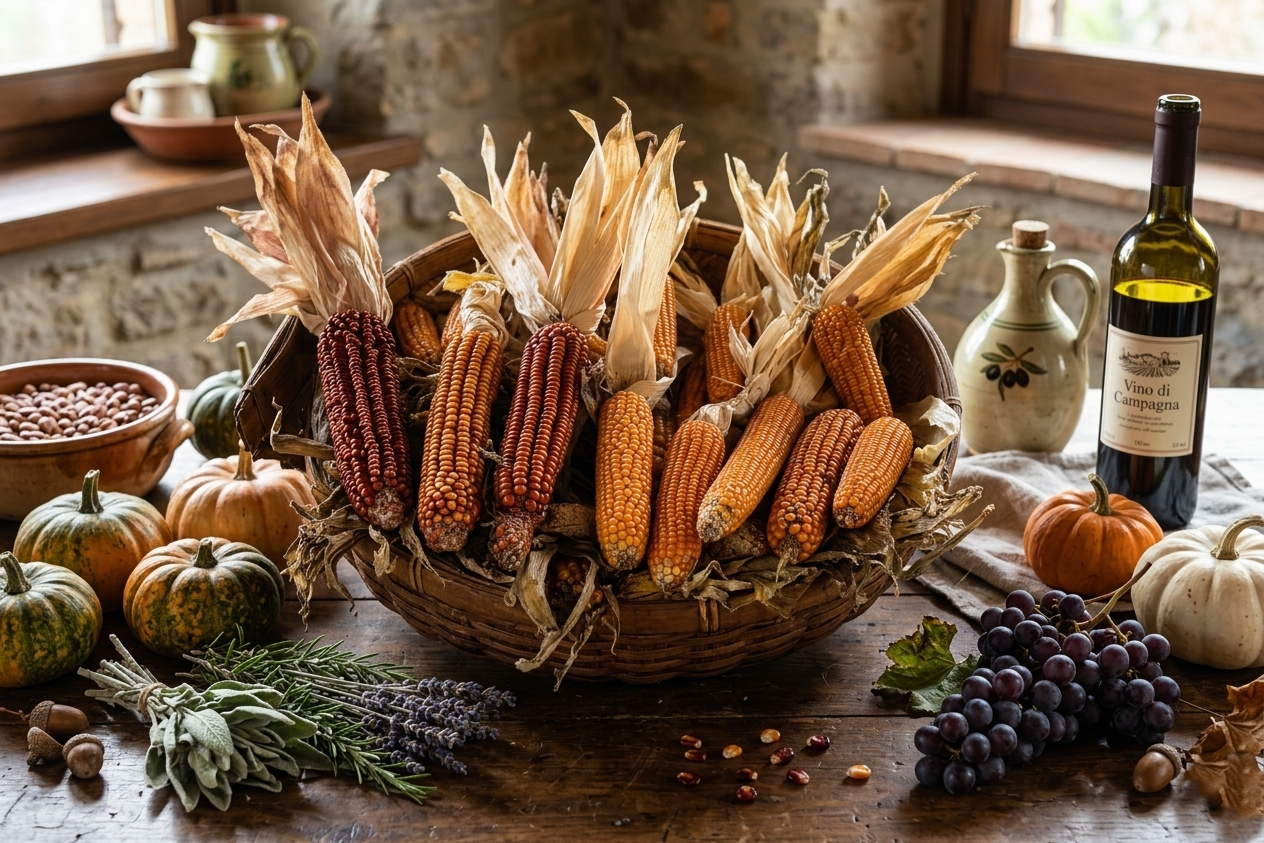
The ears are relatively small, with round, golden yellow or reddish seeds.
The plant reaches heights of about 1.7–2 meters, typical of traditional non-hybrid varieties.
Origins and areas of dissemination
The variety has ancient roots and was grown in the Marche countryside, in Umbria and in some areas of Abruzzo and Lombardy.
With the advent of hybrid, more productive corn, Quarantino has been progressively abandoned.
Recently, recovery projects have brought the variety back to cultivation, enhancing its genetic and gastronomic heritage.
Gastronomic use: polenta and peasant tradition
Flour made from Quarantino corn is suitable for rustic polenta, with a more authentic taste than industrial polentas. Traditionally, corn husking was a collective moment of socialization in rural communities.
Today, flour is also used for traditional breads and desserts, rediscovering peasant recipes.
Conservation status and challenges
Quarantino remains an endangered crop, with limited production and marginal market demand.
Recovering it means safeguarding not only an agricultural variety, but also traditions and knowledge linked to rural life.
Why include these specialties in a food and wine trip to Trasimeno
To savor a legume that represents hundreds of years of peasant history: the Fagiolina del Trasimeno is a small gem with a delicate flavor.
To enjoy an experience of sustainable agriculture and biodiversity, enhancing local soils and varieties.
Discover simple yet intense dishes: bean soup, rustic Quarantino polenta, and locally sourced dishes on farms.
To immerse yourself in the rural culture and living heritage of Trasimeno, where every grain and ear tells a story.
Conclusion
The Trasimeno Bean and Quarantino Granoturco are much more than agricultural products: they represent a bridge between past and present, between tradition and sustainability.
Valuing them means rediscovering identities, roots, and communities.
On a trip to Lake Trasimeno, tasting these products and talking to those who grow them allows you to have an authentic experience, with the taste and memory of the area.
Cooking class: from the earth to the table
Experience authentic peasant cuisine on Lake Trasimeno
Gather ingredients from the garden, discover the secrets of Umbrian cuisine, and prepare traditional handmade pici on a farm surrounded by nature.
Book the cooking class
Farm Day: Visit and Tasting
Discover the authentic life of the Umbrian countryside
Spend a day on the farm among nature, animals, genuine products and traditional flavors of the area, in the heart of the hills of Lake Trasimeno.
Book the farm visit